BMPR2抗体可以识别内源性的总BMPR2蛋白。该抗体会产生一条115Kd的非特异性条带。合成与人BMPR2蛋白邻近 Lys763氨基酸残基序列一致的肽段,免疫动物获得单克隆抗体。抗体通过蛋白A和肽亲和层析纯化。BMPR2是一种II型丝氨酸/苏氨酸受体激酶,可以结合一系列分泌型骨形成蛋白(BMPs)。BMPs是一类属于TGF-β超家族的配体,介导原肠胚形成,神经发生,软骨形成,interdigital细胞死亡和骨骼形成(1-5)。不同于TGF-β type II受体,BMPR2包含一个延伸的羧基末端区域,能够与各种信号分子结合介导BMPs靶基因的反应(6,7)。BMP信号需要I型和II型受体聚合以引发靶基因的功能反应。BMP结合到I型和II型受体将导致Smad1/5/8磷酸化,这种磷酸化对于靶基因的激活是必需的(7)。体外和体内证据都显示BMPR2缺陷会导致肺动脉高血压,炎症反应和内皮损伤(8,9)。
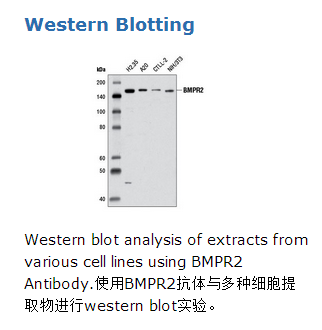
BMPR2 Antibody recognizes endogenous levels of total BMPR2 protein. This antibody may also detect a 115 Kd unspecific band.
Source / Purification
Polyclonal antibodies are produced by immunizing animals with a synthetic peptide corresponding to residues surrounding Lys763 of human BMPR2 protein. Antibodies are purified by protein A and peptide affinity chromatography.
Background
BMPR2 is a type II serine/threonine receptor kinase that binds to an array of secreted bone morphogenetic proteins (BMPs). BMPs belong to the superfamily of TGF-β ligands that modulate gastrulation, neurogenesis, chondrogenesis, interdigital cell death, and bone morphogenesis (1-5). In contrast to the TGF-β type II receptor, BMPR2 contains an extended carboxyl-terminal region that interacts with multiple signaling molecules to modulate the responsiveness of target genes to BMPs (6,7). BMP signaling requires oligomerization of both type I and type II receptors to elicit a functional response of target genes. BMP binding to type I and II receptors induces Smad1/5/8 phosphorylation which is required for the activation of target genes (7). In vitro and in vivo evidence suggests that defects in BMPR2 may contribute to pulmonary hypertension, inflammation, and endothelial injury (8,9).








 京公网安备11010802025653 版权所有:北京逸优科技有限公司