NF-κB is a ubiquitously expressed transcription factor that regulates many cytokine and Ig genes. It is involved in immune, inflammatory,
viral, and acute phase responses. The most studied NF-κB complex consists of the p50 and p65 subunits, both containing a 300 amino acid
region with homology to the Rel proto-oncogene product. The p50 subunit binds DNA, whereas the p65 subunit is responsible for the
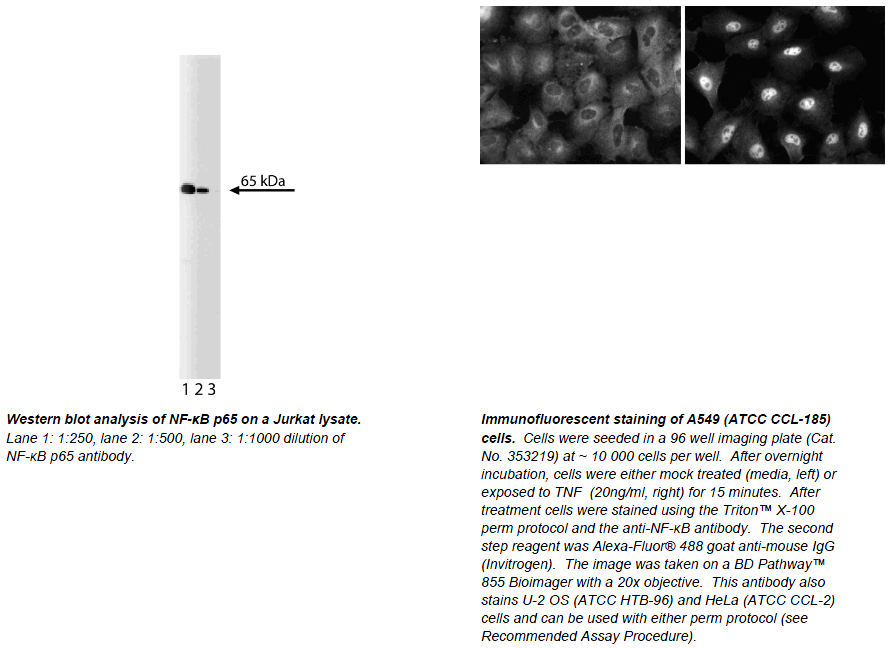
interaction of NF-κB with its inhibitor, IκB. In most cell types, the p50/p65 heterodimer is located within the cytoplasm complexed to IκB.
This complex prevents nuclear translocation and activity of NF-κB. In response to stimuli such as cytokines, LPS, and viral infections, IκB is
phosphorylated at critical residues. This phosphorylation induces dissociation of the IκB/NF-κB complex, allowing the free heterodimeric
NF-κB to form a heterotetramer that translocates to the nucleus. In the nucleus, it binds to the κB site within promoters and enhancers and
functions as a transcriptional activator.
原厂资料:
注意事项:
1.Since applications vary, each investigator should titrate the reagent to obtain optimal results.
2.This antibody has been developed and certified for the bioimaging application. However, a routine bioimaging test is not performed on every lot. Researchers are encouraged to titrate the reagent for optimal performance.
3.Caution: Sodium azide yields highly toxic hydrazoic acid under acidic conditions. Dilute azide compounds in running water before discarding to avoid accumulation of potentially explosive deposits in plumbing.








 京公网安备11010802025653 版权所有:北京逸优科技有限公司